Detailed Comparison 2025
Cascade vs Nextbase
Compare Cascade and Nextbase side-by-side. We've analyzed features, pricing, and capabilities to help you choose the best boilerplate for your SaaS project.
Quick Overview

Cascade
Cascade is a free, open-source SaaS starter kit based on the T3 stack (with Next.js + Prisma + PostgreSQL + TypeScript) that aims to give you a “ready-to-code business logic” foundation rather than a full-blown UI framework. Its core philosophy is minimal bloat. Once you clone the repo, provide environment variables and database config, you can have a working backend (auth, DB, basic flows) running locally in minutes. Cascade supports essential SaaS‑app plumbing such as authentication (via Auth.js / NextAuth + Prisma), database setup (PostgreSQL + Prisma), payments & billing (through Lemon Squeezy integration), background jobs (with Trigger.dev), error tracking (via Sentry), analytics (via self‑hostable or free‑plan friendly services like PostHog / Plausible), plus optional “business‑adjacent” pieces: a markdown-based blog via Contentlayer, email flows, server‑side rendering, and basic CI/CD / deployment setups.
Key Features
Nextbase
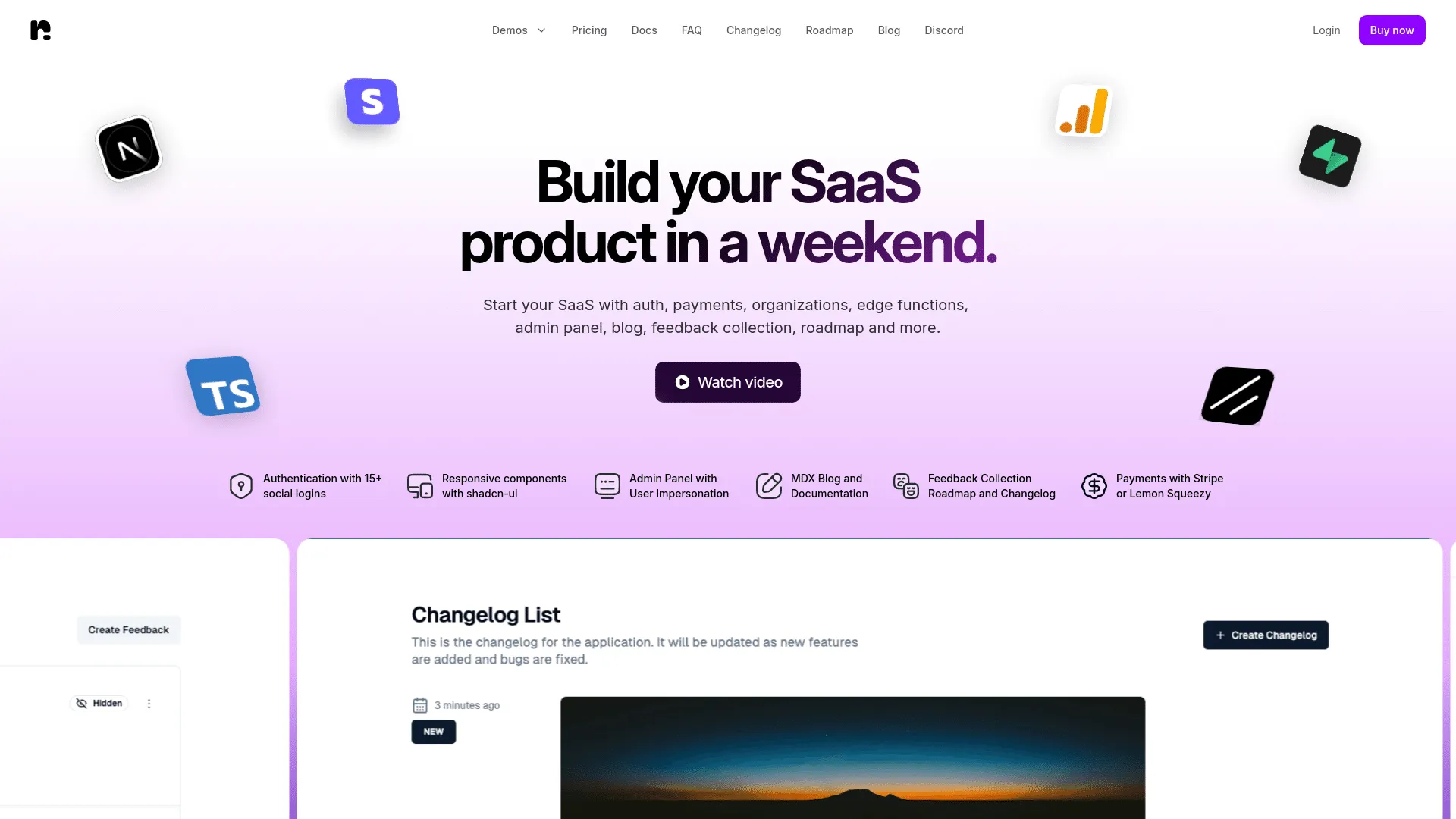
NextBase is a Next.js + Supabase full‑stack SaaS starter kit. It combines authentication (with multiple social login providers), team/organization support, subscription payments (Stripe or LemonSqueezy), a prebuilt admin panel and user‑management UI, database & backend setup, and a frontend built with React, Typescript, and Tailwind CSS. On top of that, NextBase includes extras like a MDX‑based blog/docs/landing‑page system, feedback & roadmap/changelog tools, in‑app notifications, and integrations for analytics & error tracking. The architecture is type-safe, modern (React + Next.js app‑router, Supabase backend, TS + Zod validation), and built to support both MVPs and production-ready SaaS products.
Key Features
Feature-by-Feature Comparison
| Feature | CascadeFree | Nextbase$99 |
|---|---|---|
| Price | Free | $99 |
| Developer | Dima Ivashchuk | Bhargav Ponnapalli |
| Authentication | ||
| Stripe Integration | ||
| Paddle Integration | ||
| Lemon Squeezy | ||
| Dodo Payments | ||
| Polar | ||
| Creem | ||
| Admin Panel | ||
| User Dashboard | ||
| Subscriptions | ||
| Blog | ||
| SEO Optimized | ||
| Documentation | ||
| Support | ||
| Tailwind CSS | ||
| API | ||
| Two-Factor Auth | ||
| Multi-Tenancy | ||
| Teams | ||
| Shadcn UI | ||
| View Details | View Page | View Page |
Cascade vs Nextbase: Detailed Analysis
When choosing between Cascade and Nextbase, it's essential to understand the key differences that make each boilerplate unique. Both are excellent choices for building SaaS applications, but they cater to different needs and development approaches.
What is Cascade?
Cascade is a free, open-source SaaS starter kit based on the T3 stack (with Next.js + Prisma + PostgreSQL + TypeScript) that aims to give you a “ready-to-code business logic” foundation rather than a full-blown UI framework. Its core philosophy is minimal bloat. Once you clone the repo, provide environment variables and database config, you can have a working backend (auth, DB, basic flows) running locally in minutes. Cascade supports essential SaaS‑app plumbing such as authentication (via Auth.js / NextAuth + Prisma), database setup (PostgreSQL + Prisma), payments & billing (through Lemon Squeezy integration), background jobs (with Trigger.dev), error tracking (via Sentry), analytics (via self‑hostable or free‑plan friendly services like PostHog / Plausible), plus optional “business‑adjacent” pieces: a markdown-based blog via Contentlayer, email flows, server‑side rendering, and basic CI/CD / deployment setups.
Developed by Dima Ivashchuk, Cascade has become a popular choice among developers looking for a reliable starting point for their SaaS projects.
What is Nextbase?
NextBase is a Next.js + Supabase full‑stack SaaS starter kit. It combines authentication (with multiple social login providers), team/organization support, subscription payments (Stripe or LemonSqueezy), a prebuilt admin panel and user‑management UI, database & backend setup, and a frontend built with React, Typescript, and Tailwind CSS. On top of that, NextBase includes extras like a MDX‑based blog/docs/landing‑page system, feedback & roadmap/changelog tools, in‑app notifications, and integrations for analytics & error tracking. The architecture is type-safe, modern (React + Next.js app‑router, Supabase backend, TS + Zod validation), and built to support both MVPs and production-ready SaaS products.
Created by Bhargav Ponnapalli, Nextbase offers a robust foundation for building scalable SaaS applications.
Need to Promote Your Startup or Boilerplate?

Check out LaunchDirectories.com to get your startup or boilerplate listed in 100+ product launch directories and gain valuable backlinks from high-authority platforms. This is especially effective for new products looking to quickly build domain authority and gain backlinks.
Payment Integration: Cascade vs Nextbase
When building a SaaS application, choosing the right payment integration is crucial for monetization success. Let's compare the payment options available in Cascade and Nextbase.
Cascade Payment Options
Cascade supports Lemon Squeezy. This includes Merchant of Record (MoR) options that handle global tax compliance automatically, making it easier to sell internationally without worrying about VAT, GST, or sales tax regulations.
Nextbase Payment Options
Nextbase integrates with Stripe.
Key Differences Between Cascade and Nextbase
💰 Pricing
Cascade is priced at Free, while Nextbase costs $99. Nextbase offers better value at a lower price point, saving you 999900 dollars.
⚡ Features & Capabilities
Both boilerplates include authentication systems, making it easy to implement user login and registration.
Payment processing is available in both options. Cascade supports Lemon Squeezy, while Nextbase integrates with Stripe.
Nextbase includes an admin panel for easier application management.
🎯 Best Use Cases
Cascade
- • SaaS startups looking for quick deployment
- • Projects requiring authentication
- • Teams with flexible budgets
Nextbase
- • SaaS applications needing rapid development
- • Projects requiring authentication
- • Teams with limited budgets
When to Choose Cascade vs Nextbase
Choose Cascade if:
- You want to start with Cascade's specific tech stack and approach
- Your project aligns with Cascade's feature set
Choose Nextbase if:
- You're looking for the most cost-effective solution
- You require an admin panel for managing your application
- You prefer Nextbase's specific approach and features
- Your requirements match Nextbase's capabilities
Final Verdict: Cascade vs Nextbase
Both Cascade and Nextbase are excellent choices for building SaaS applications. Your decision should be based on your specific requirements, budget, and technical preferences.
Cascade is ideal if you're looking for a feature-rich solution with built-in authentication.
Nextbase stands out for its competitive pricing and is perfect for developers who need authentication.
Ultimately, both boilerplates will help you launch your SaaS product faster and more efficiently. Review the detailed comparison above, consider your project requirements, and choose the one that aligns best with your goals.
Frequently Asked Questions: Cascade vs Nextbase
Which is better: Cascade or Nextbase?
The "better" choice depends on your specific needs. Cascade excels in comprehensive features, while Nextbasestands out for value pricing. Consider your budget, required features, and development timeline when making your decision.
What's the price difference between Cascade and Nextbase?
Cascade costs Free while Nextbase is priced at $99. That's a difference of $999900. Both are one-time payments with no recurring fees, making them cost-effective long-term investments for your SaaS project.
Can I switch from Cascade to Nextbase later?
While technically possible, switching boilerplates mid-project is challenging and time-consuming. Each boilerplate has its own architecture, dependencies, and patterns. It's best to carefully evaluate both options now and choose the one that best fits your long-term needs to avoid costly migrations later.
Do Cascade and Nextbase offer similar features?
Both boilerplates offer core SaaS features, but with different implementations and additional capabilities. Check the detailed feature comparison table above to see exactly which features each boilerplate includes. Key differences include payment integrations, authentication systems, and admin panel availability.
Which boilerplate is better for beginners?
For beginners, consider factors like documentation quality, community support, and code complexity. Both Cascade and Nextbase are designed to be developer-friendly, but your choice should depend on your familiarity with their respective tech stacks and the learning resources available.
Are there any hidden costs with Cascade or Nextbase?
Both boilerplates are one-time purchases with no recurring licensing fees. However, you may incur costs for third-party services they integrate with (like payment processors, email services, or hosting platforms). These operational costs are separate from the boilerplate purchase and apply to any SaaS application.
How long does it take to launch with Cascade vs Nextbase?
Both boilerplates significantly reduce development time compared to building from scratch. Depending on your customization needs, you could launch a basic SaaS product in days or weeks rather than months. The exact timeline depends on your specific requirements, team size, and development experience.
Explore More Comparisons
Browse all boilerplates and find the perfect starter kit for your SaaS project.