Next.js

Next.js + Blog

Best Next.js Boilerplates with Blog

Boilerplates with built-in blog functionality for content marketing and SEO. These carefully selected Next.js boilerplates are perfect for building SaaS applications with blog integration. Compare features, prices, and find the perfect boilerplate for your project.

Best Next.js Boilerplates with Blog

Shipfast
Shipfast
ShipFast is a full‑stack SaaS and AI boilerplate built on Next.js, designed to help developers launch web applications and subscription-based products quickly. Trusted by over 135,000 users worldwide, it has been used to generate significant revenue and has proven itself as a reliable foundation for building production-ready SaaS products. The boilerplate includes authentication, payment and subscription management via Stripe or LemonSqueezy, database integration, email workflows, multi-tenant support, and prebuilt responsive UI components, along with templates for landing pages, blogs, and marketing content. ShipFast was created by Marc Lou, a renowned indie hacker and Product Hunt award winner, who actively uses the boilerplate to build and scale his own products. Its fully structured architecture, pre-wired SaaS flows, and ready-to-deploy setup allow developers to skip repetitive boilerplate work and focus on their product’s unique features. While it is highly effective for rapid launches, one limitation is that updates are not extremely frequent, which may require manual maintenance to keep dependencies up to date. Overall, ShipFast offers a trusted, widely adopted solution for indie founders, solo developers, and small teams seeking a fast, scalable, and feature-complete boilerplate for launching SaaS or AI-powered web applications.
Stack
Next.jsReactNode.js
Price$199
Lifetime
Supastarter
Supastarter
SupaStarter is a top-quality, full-featured SaaS boilerplate designed to accelerate web application development by providing a robust, production-ready foundation. Frequently updated to stay aligned with the latest technologies, SupaStarter is trusted by many successful projects and hundreds of developers worldwide. It seamlessly integrates authentication, role-based access control, team and multi-tenant management, and secure payment and subscription handling with popular providers like Stripe, Lemon Squeezy, and Polar. Supporting modern frontend frameworks such as Next.js and Nuxt 3, with TypeScript, Tailwind CSS, and Radix UI components, it delivers a responsive, customizable interface including dark mode. The backend features fully typed APIs, ORM integration with Prisma or Drizzle, background job support, cron automation, and built-in internationalization (i18n). SupaStarter also includes prebuilt landing pages, marketing pages, legal templates, and email templates, enabling developers to focus on core business logic rather than repetitive setup. With a one-time purchase and scalable architecture, SupaStarter ensures fast, maintainable, and reliable SaaS deployments for MVPs or full-scale applications.
Stack
Next.jsRemixSvelte
Price$349
Lifetime
Dirstarter
Dirstarter
Dirstarter is a full-featured boilerplate built with Next.js (with TypeScript) designed for launching directory-style websites. It gives you a ready-made foundation: authentication and user management, admin panel, listing submission and management, payment integration via Stripe, and monetization options (premium listings, featured spots, ads, affiliate-links, etc.). Beyond that, Dirstarter includes SEO-friendly page structure, support for multiple languages (i18n), and built-in tools for content creation (including AI-powered content generation to help bootstrap listings and categories). On the technical side, Dirstarter leans on a modern, maintainable stack: Next.js, a modern ORM (e.g. Prisma), CSS via Tailwind CSS, and UI components from shadcn/ui / Radix UI which means you’ll get a responsive, customizable UI and a code structure that’s relatively straightforward to work with and extend. The value proposition of Dirstarter is that instead of spending weeks building the backbone of a directory site: user flows, payments, listings DB, admin UI, monetization logic, i18n, SEO - you get a working system out-of-the-box and can focus immediately on content, branding, and growth. For someone building a directory or listing-type website (local businesses, tools marketplace, niche listing directory, etc.), this can significantly reduce time to launch. However, adopting Dirstarter also means accepting its architecture and conventions. It’s opinionated: you're committing to the tech choices (Next.js + Prisma + Tailwind + the integrations Dirstarter bundles). If your project requires a drastically different backend setup, custom data models or unusual flows, you may spend extra effort altering or stripping parts you don’t need. Moreover, because it offers a lot of built-in features (payments, content generation, monetization, i18n, admin, etc.), you may end up with more “surface area” than needed which can complicate maintenance if you only need a simple directory.
Stack
Next.jsReact
Price$159
Lifetime
Makerkit
Makerkit
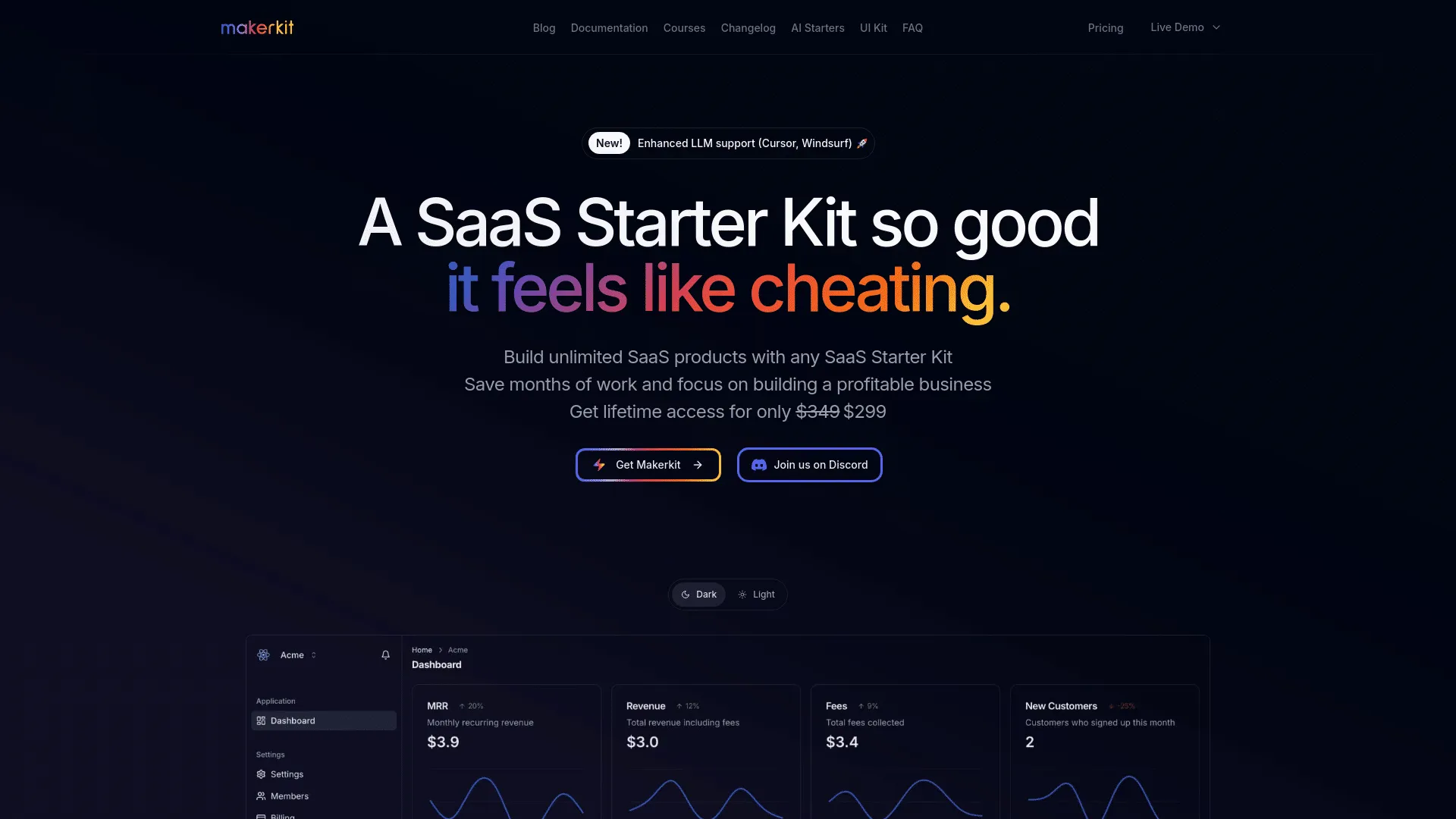
MakerKit is a SaaS‑starter boilerplate built for modern React/Next.js (also supporting Remix/Supabase or Firebase variants) that tries to give you a production‑ready foundation, rather than a barebones template. At its core MakerKit bundles authentication (email, social login, magic‑link, optional MFA), user and team/organization management (multi‑tenancy, roles, invitations), and subscription/billing support via payment providers (Stripe or Lemon Squeezy). The boilerplate comes styled by default using a modern UI stack with Tailwind CSS (and Shadcn/Radix‑based UI components), with light/dark mode and includes UI scaffolding for dashboards, admin panels, marketing pages, blog/documentation pages, and a customizable layout structure. MakerKit aims to reduce the time and effort needed to ship a SaaS: instead of wiring up auth, payments, data layer, UI and common SaaS flows from scratch, you get a working skeleton that you can extend, customize, and build on. This includes also support for serverless or traditional hosting setups, built‑in support for sending stylized transactional emails, and optional plugins/features (like documentation/blog generation, admin dashboards, analytics hooks, and more) to help bootstrap both the product and its public-facing/marketing side.
Stack
Next.jsReactNode.jsRemix
Price$349
Lifetime
31SaaS
31SaaS
31SaaS feels like a project built by someone who actually ships products, not someone assembling a checklist of features. The whole thing runs on Next.js 14, and the structure is clean in a way that makes sense the moment you open the repo — the kind of layout you’d probably set up yourself after a few iterations, just without the wasted weekend. The authentication flow, Stripe setup, and email handling are already connected and working, not half-finished stubs. The UI is put together with shadcn and Tailwind, so it looks modern without being overdesigned, and it’s easy to extend without fighting the styling choices. What stands out is that you can start building real features almost immediately. There’s a proper dashboard, a place for marketing pages, a blog engine that doesn’t feel like an afterthought, and small touches like sensible error handling and clean form patterns. It’s not trying to reinvent the wheel — it’s just a solid, well-assembled foundation that saves you from the usual setup grind. If you want a boilerplate that stays out of your way and lets you move quickly without later regretting the shortcuts, 31SaaS is one of the more thoughtfully built options out there.
Stack
Next.js
Price$129
Lifetime
Bedrock
Bedrock
Bedrock is a full‑stack boilerplate for building SaaS products, built on Next.js and GraphQL. It’s designed to take care of the usual foundational work: user authentication, subscription payments (via Stripe), team/project support (multi‑project or multi‑tenant logic, invitations & membership handling), email integration, database setup, API wiring (using e.g. Prisma + GraphQL schema), and general plumbing like linting, formatting, code generation, and CI/testing setup. Importantly, Bedrock ships “unstyled” meaning it doesn’t impose a UI or design system on you. What it gives you is the backend logic, data flow, and structural foundation; the visual layer is entirely yours (or up to whatever UI framework/components you choose). Because of its modular architecture, many of the bundled tools and integrations are optional you can drop or swap parts if they don’t fit your preferences.
Stack
Next.jsReactNode.js
Price$396
Codepilot
Codepilot
CodePilot is a paid SaaS‑boilerplate based on Next.js + Prisma + TypeScript. It aims to give you a full, ready‑to‑code foundation so you don’t have to build from zero: auth, payments, dashboards, email, blog/landing pages and more are already wired up. Out of the box you get a functional user dashboard and admin panel, auth support (with credentials, magic‑link or OAuth/social providers), Stripe‑based payments, email templates (via Resend), a landing page + blog + SEO content structure, and a prebuilt UI component library (with styling, animations and customization options) so you can ship quickly.
Stack
Next.js
Price$139
Lifetime
Full Stack Kit
Full Stack Kit
Full‑Stack Kit is a paid full‑stack boilerplate / template for modern web apps, built around Next.js (version 15), TypeScript, Prisma (with PostgreSQL by default, but supporting other databases), and Tailwind CSS (or comparable styling). The template aims to provide a ready‑to‑go foundation so developers don’t have to implement common boilerplate features from scratch. Full‑Stack Kit bundles typical “standard web application infrastructure”: authentication (email/password, OAuth, magic‑link), role‑based authorization, a built-in admin panel for user and content/announcement management, billing/subscriptions via Stripe (with subscription management, invoices), multi-language support (internationalization), landing‑pages/templates, user dashboards, and a set of UI/layout components for marketing pages, dashboards, and more. It’s positioned as a “launch‑fast” boilerplate: you get a structured, clean, extendable codebase with authentication, billing, UI scaffolding, admin & user management, which lets you focus on crafting the unique parts of your product rather than reinventing the foundation.
Stack
Next.js
Price$59
Lifetime
Gravity
Gravity
Gravity is a full‑stack boilerplate for JavaScript/TypeScript projects combining a Node.js backend with a React (or React Native) frontend designed to give developers a head‑start when building SaaS applications. It aims to deliver a working foundation so that you don’t need to assemble all the plumbing (auth, billing, database, UI, API) from scratch. The boilerplate includes support for multiple databases (like Postgres, MySQL, MongoDB, MariaDB and possibly others) which gives flexibility depending on your data/storage preferences. There is also a full “stack” support: server (Node.js + Express/API backend), web client (React + Tailwind or similar), and optionally native mobile clients (via React Native), which helps if you want a unified codebase for web + mobile. Beyond the core stack, Gravity claims to bundle SaaS‑ready features: authentication (email/password, magic links, social logins, 2FA, account security), subscription & billing support (with free plans, trials, seat‑based or usage billing), and a library of UI components & views (dashboard, admin tools, layout components, responsive UI, dark mode, etc.). Gravity also offers a “website/landing page template” (built with a static‑site generator + modern site tooling) useful for marketing, landing pages, pricing pages, etc. — thereby giving you both the “app core” and “public‑facing site” foundation.
Stack
Next.jsReactNode.js
Price$696
1 year
LaunchFast
LaunchFast
LaunchFast is a boilerplate designed to give developers a solid starting point for building modern web applications. It comes with pre-configured templates for frameworks like Next.js, Astro, and SvelteKit, providing authentication, database connections, payment integration, email support, analytics, and content management all set up and ready to go. The goal is to remove repetitive setup work so developers can focus on building the unique parts of their app. LaunchFast also includes SEO-friendly routing, page templates, and a basic UI scaffold, making it easier to launch functional web apps or SaaS projects quickly. While it speeds up initial development, adopting LaunchFast means following its chosen stack and architecture, so projects that require a highly customized setup may need adjustments or modifications to the default structure.
Stack
Next.jsReactNode.jsSvelte
Price$99
Lifetime
Neorepo
Neorepo
Neorepo is a production‑ready SaaS boilerplate / starter‑kit built on a modern web stack. It uses Next.js (app router), Tailwind CSS, tRPC, Prisma (or supported backend), and optional backend services (like PlanetScale, Supabase or Firebase) depending on the kit version. Neorepo is provided in several “flavours” (kits) so you can choose the backend infrastructure that fits your project: e.g. “Scalerepo” for PlanetScale/PostgreSQL, “Suparepo” for Supabase, or Firebase‑based kit. Neorepo comes with a full suite of SaaS‑oriented features already wired up: user authentication (passwordless, OAuth, even anonymous auth), organization/team management (teams, member invites, roles/permissions), subscription & payment processing (via Stripe, supporting tiered plans or one‑time purchases), transactional email flows, and a marketing‑ready landing page. Beyond the core SaaS plumbing, Neorepo bundles content and engagement tools: a blog, changelog, documentation pages — plus marketing site templates and SEO‑friendly setup, giving you both the “app side” and the “public site / marketing side” scaffolded and connected. The kit’s architecture is organized and type‑safe, combining tRPC + Prisma + Next.js + Tailwind which, for developers familiar with modern JS/TS stacks, means maintainability, good developer experience, and a clean codebase.
Stack
Next.jsNode.js
Price$99
Lifetime
Next Starter AI
Next Starter AI
Next Starter AI is a full‑stack boilerplate built with Next.js + TypeScript + modern frontend tools, designed to help developers launch SaaS apps, AI‑powered web tools or web applications quickly. It bundles ready‑made integrations for common SaaS and web‑app infrastructure: authentication and user management, payment processing (via Stripe or LemonSqueezy), database setup, AI‑tool integration, email delivery, SEO / metadata configuration, landing pages, blog / content pages, and front‑end UI components giving you a nearly‑complete foundation so you don’t have to wire everything manually. Next Starter AI offers a codebase where payment flows, authentication, database/config setup, UI scaffolding, and essential web‑app plumbing are already implemented. That means you can skip repetitive setup work (user sign‑in/up, billing integration, email and content setup, landing page, blog, etc.) and focus directly on building your product’s features. It also includes templates and components for UI (landing pages, dashboards or web‑app views) and wiring for SEO, analytics/marketing integrations, email/mailing functionality, and options for AI‑tool integration if your app needs it.
Stack
Next.js
Price$169
Lifetime
NextJet
NextJet
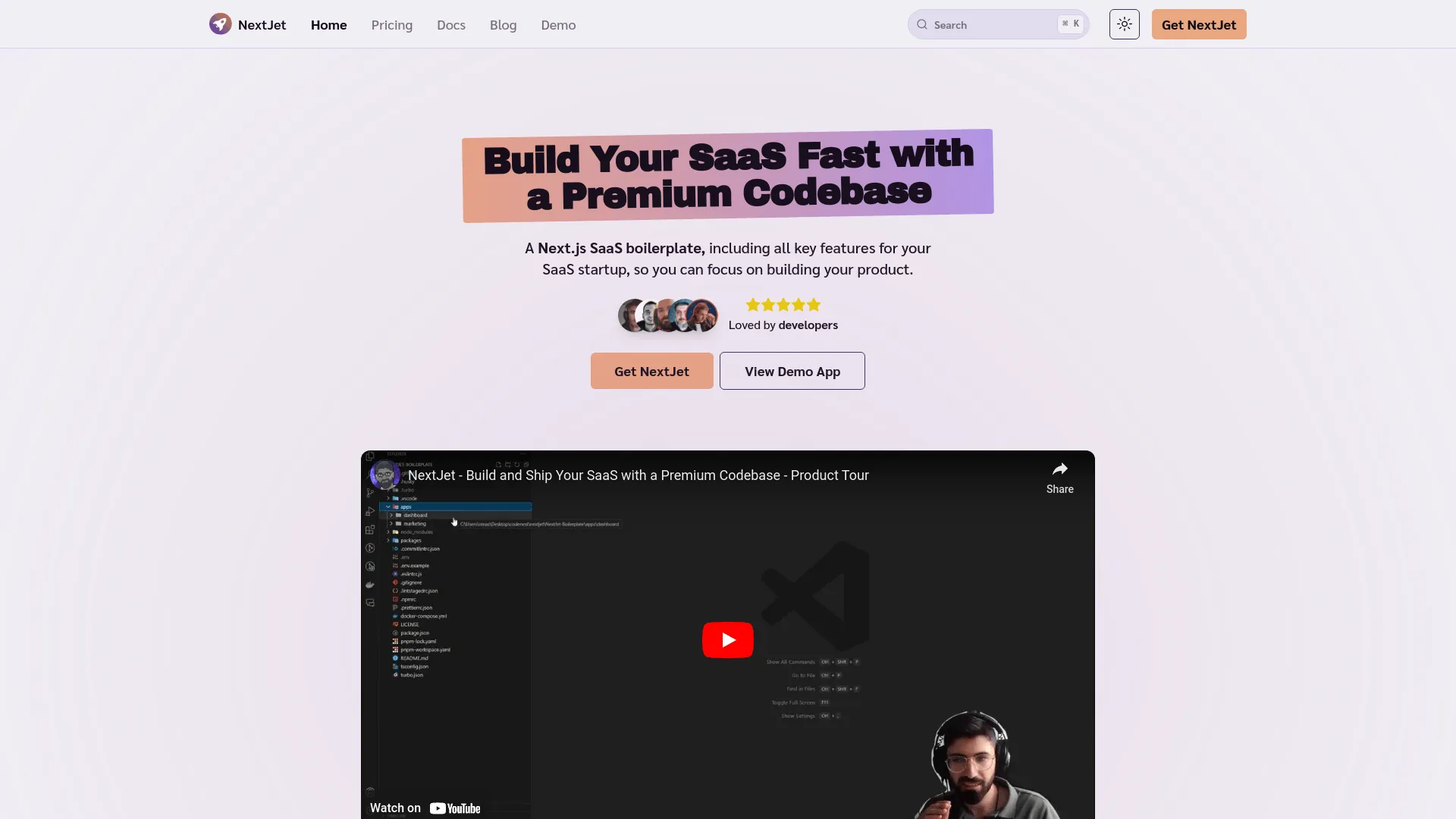
NextJet is a full‑stack SaaS boilerplate built with Next.js, TypeScript and modern web‑app tooling, made to give developers a solid, production‑ready foundation when building subscription‑based or SaaS‑style applications. Out of the box it handles core infrastructure: user authentication + authorization (including OAuth and magic‑link support), payment/subscription logic via Stripe or Lemon Squeezy, and pre‑built user dashboards + admin panel. It also includes content‑management and marketing‑side features: a blog and documentation system using MDX, a customizable landing/marketing site, email templates, and onboarding flows. The project follows a modular, maintainable architecture (monorepo via Turborepo, clean folder structure, typesafety via TypeScript), which helps keep code organized, useful if you plan to grow or scale the app over time. Because much of the “plumbing” is already configured, you can skip repetitive setup and get to building your product‑specific logic faster. At the same time, using NextJet means trusting its built‑in architecture, tech stack and conventions. If your project needs a very different stack, unusual backend/data requirements or a minimal footprint, you might need to refactor or drop parts of what comes with the boilerplate.
Stack
Next.js
Price$69
Lifetime
ProtonStack
ProtonStack
ProtonStack is a full‑stack boilerplate built with Next.js + React + TypeScript + Tailwind CSS, designed to give developers a ready‑made foundation for SaaS and web applications. Out of the box, ProtonStack includes a production‑ready authentication and user‑management system via Clerk.dev, database integration through Prisma (with support for various databases, including Postgres, MySQL, or scalable services like PlanetScale or Supabase), subscription and payment workflows via Stripe, multitenancy (organizations/teams support), plus a UI kit built with component libraries like Shadcn UI / Radix UI. ProtonStack also provides strong developer tooling: linting/formatting (ESLint, Prettier), commit‑hooks (with Husky), schema validation (via Zod), unit and end‑to‑end testing setup (with Jest, React Testing Library, and Cypress), plus built-in support for a blog or documentation using MDX useful for marketing or public‑facing content.
Stack
Next.js
Price$99
Lifetime
ReactApp
ReactApp
ReactApp is a full‑stack SaaS starter built with React + Next.js + Firebase that aims to help developers launch web applications quickly without wiring everything manually. Its stack combines frontend (React & Next.js), UI styling (Tailwind CSS), backend and hosting (Firebase: authentication, Firestore database, serverless functions, hosting), plus built‑in infrastructure for payments (Stripe), transactional emails (Postmark), and optional utilities like a cookie banner, analytics support, and a chat widget for user interaction. With ReactApp you get a project structure where authentication flows (sign‑up/login/reset), user sessions, secure database, payment/subscription handling, and UI/layout scaffolding are already configured. This lets you skip much of the usual boilerplate: routing, backend setup, admin/user flows and go straight to building custom features.
Stack
Next.js
Price$19
Lifetime
SaaSBold
SaaSBold
SaaSBold is a full‑stack SaaS boilerplate and starter‑kit built with Next.js + TypeScript + Prisma/PostgreSQL (or compatible database), offering both frontend and backend scaffolding to help launch a SaaS or web application rapidly. It aims to provide an end‑to‑end glue: authentication (with social logins, magic links, email/password), payment/subscription and billing logic (via Stripe, with additional billing‑gateway support possible), user & admin dashboards, marketing/landing‑page + blog/ content pages, email/newsletter and transactional‑mail setup, internationalization (i18n), and a UI component/design system built with Tailwind CSS so you don’t need to wire all that from scratch. There are built‑in features for both end‑users and admins: user‑login/registration flows, account/dashboards, subscription management; also admin-side tools to manage users, operations, maybe analytics or CRM‑like features depending on version. SaaSBold advertises one-click deployment (e.g. to Vercel), a Figma source file + style‑guide (helpful for designers or brand consistency), email support & documentation, and lifetime updates when you license it which lowers friction for startups or solo developers who want to get a production‑ready SaaS quickly.
Stack
Next.js
Price$149
Lifetime
No image
SaaSy Land
SaaSy Land is an open‑source boilerplate / starter template for building web applications and SaaS projects. It’s built around Next.js (version 14) and uses modern frontend/ backend tooling to help you skip much of the repetitive setup normally needed for a SaaS launch. It includes a ready-to-use marketing/public‑facing side: landing/marketing pages, blog/MDX-based content support, basic layouts and UI structure, plus integrations that make it easier to build user dashboards, public sites and application back‑ends with the same code base.
Stack
Next.js
PriceFree
Lifetime
No image
Serverless
Serverless.page is a full‑stack boilerplate / starter‑kit built on Next.js + React + Firebase + Stripe that aims to accelerate the process of launching a SaaS application. The kit provides essentials such as user authentication, subscription-based payment flows via Stripe, and a content structure including a landing page, blog, and built‑in CMS. It also includes support for team or workspace management (user accounts + team invites), transactional email integrations, and an admin dashboard - everything that typically takes time to wire up is pre‑configured. Because the project uses a serverless infrastructure (Firebase + Next.js), it promises scalability and cost-effectiveness, so there is no need to manage dedicated servers, and billing scale is based on actual usage. Adopting Serverless.page means committing to its stack: Next.js + React + Firebase + Stripe + the provided codebase structure. That gives speed to launch and many built‑in SaaS features, but reduces flexibility if you need a very custom backend, different database, or special integrations. Since it's “full‑featured,” it might feel heavyweight for smaller projects or very basic prototypes. You may end up with more dependencies and configuration than strictly needed if your use case is simple.
Stack
Next.js
Price$399
Lifetime
Ship Apps Fast
Ship Apps Fast
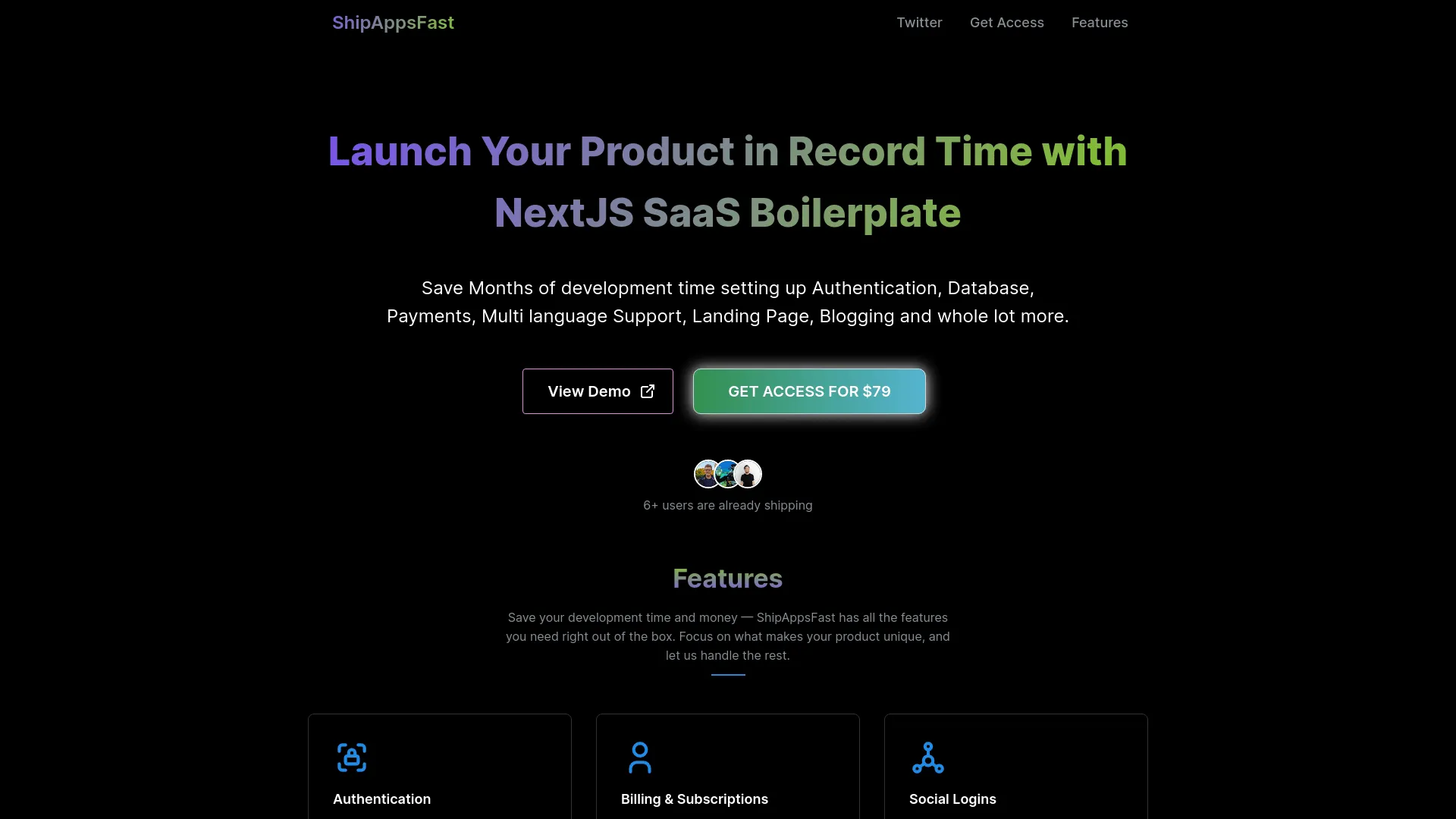
ShipAppsFast is a SaaS boilerplate built on Next.js + TypeScript + Prisma, designed to help developers launch web applications more quickly by providing a full‑featured foundation instead of starting from scratch. ShipAppsFast comes pre‑wired with user authentication (magic‑link, social login, password reset flows), subscription billing and payment processing via Stripe (including pricing tables and billing portal integration), a database setup using Prisma, and schema validation with Zod. On the frontend, it includes ready‑made UI components and layout (using Mantine UI) for landing pages, authentication screens, dashboards, blog/markdown‑based content/blog support, and mobile‑friendly styling. It also supports transactional emails (via Resend), multilingual / internationalization (i18n), and gives you a “launch‑ready” scaffold. ShipAppsFast makes sense if you’re building a subscription‑based web app or SaaS product, want authentication and billing handled, need out-of-the-box UI scaffolding + blog/landing pages + multilingual support, and prefer speed and convenience over building foundation from scratch.
Stack
Next.jsReactNode.js
Price$149
Lifetime
Solid
Solid
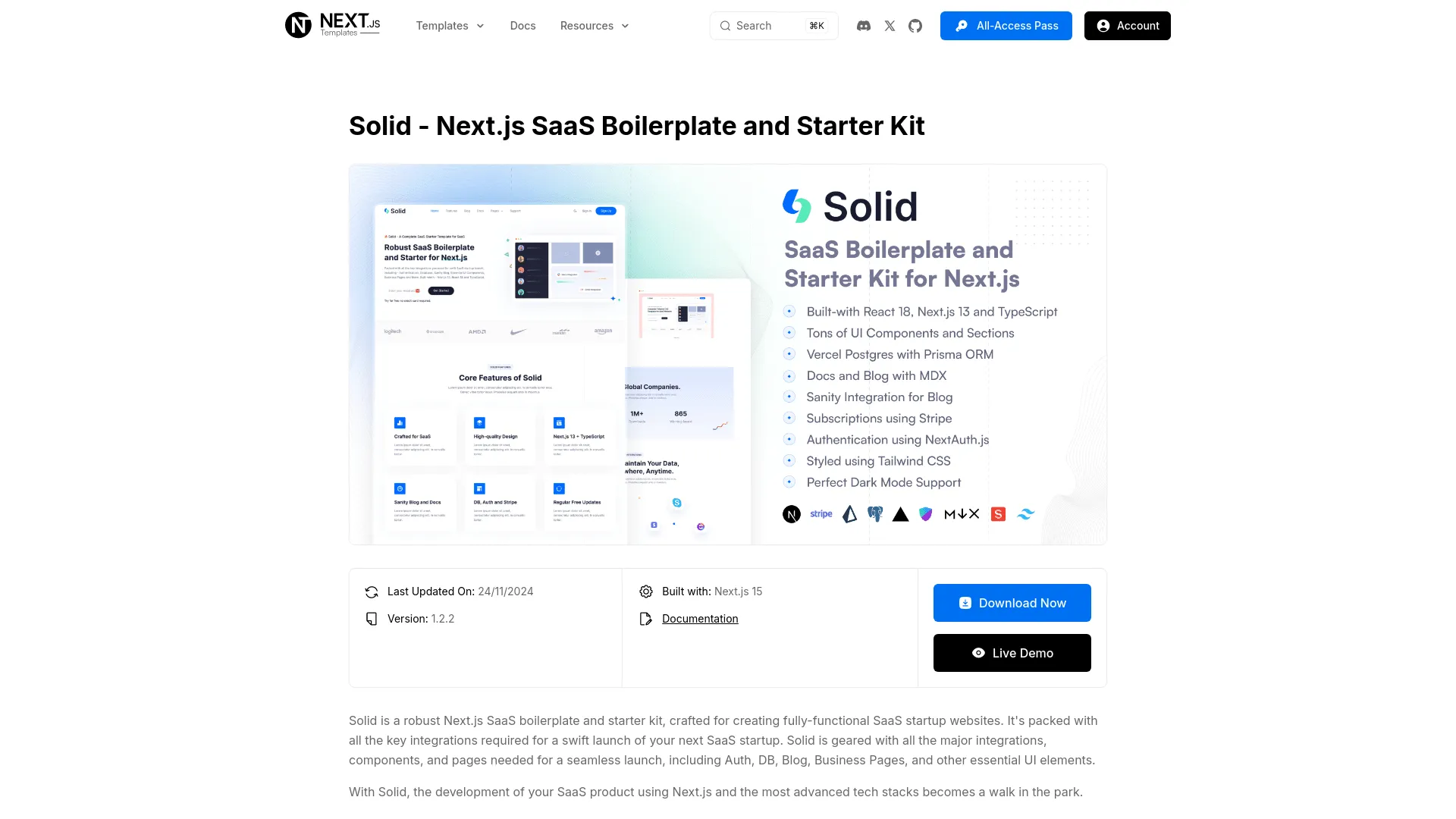
Solid is a SaaS‑oriented boilerplate / starter kit built on Next.js + React + TypeScript, designed to furnish most of the foundational pieces a modern web/SaaS project needs from frontend and backend structure to authentication, payments, content and UI components. Solid comes bundled with a wide range of features useful for SaaS or web‑app development: secure user authentication via NextAuth (supporting social login, magic‑link, password reset, etc.), database integration (designed to work with relational DB like PostgreSQL, via ORM or your preferred provider), subscription/payment support through Stripe, and blog/content support via a CMS (for instance Sanity for blog management), enabling dynamic content and documentation out-of-the-box. On the front‑end side, Solid offers a comprehensive UI kit and pre-made pages: landing page templates, pricing and business pages, blog lists and post pages, documentation pages (via MDX), auth flows pages, and responsive design with modern styling. It also includes performance & SEO optimizations, dark‑mode support, search integration (via Algolia for search), transactional email support, newsletter integration (e.g. via Mailchimp), and a collection of reusable UI components based on modern best practices, which can speed up development while maintaining code quality and scalability.
Stack
Next.js
Price$100
Lifetime
Supalaunch
Supalaunch
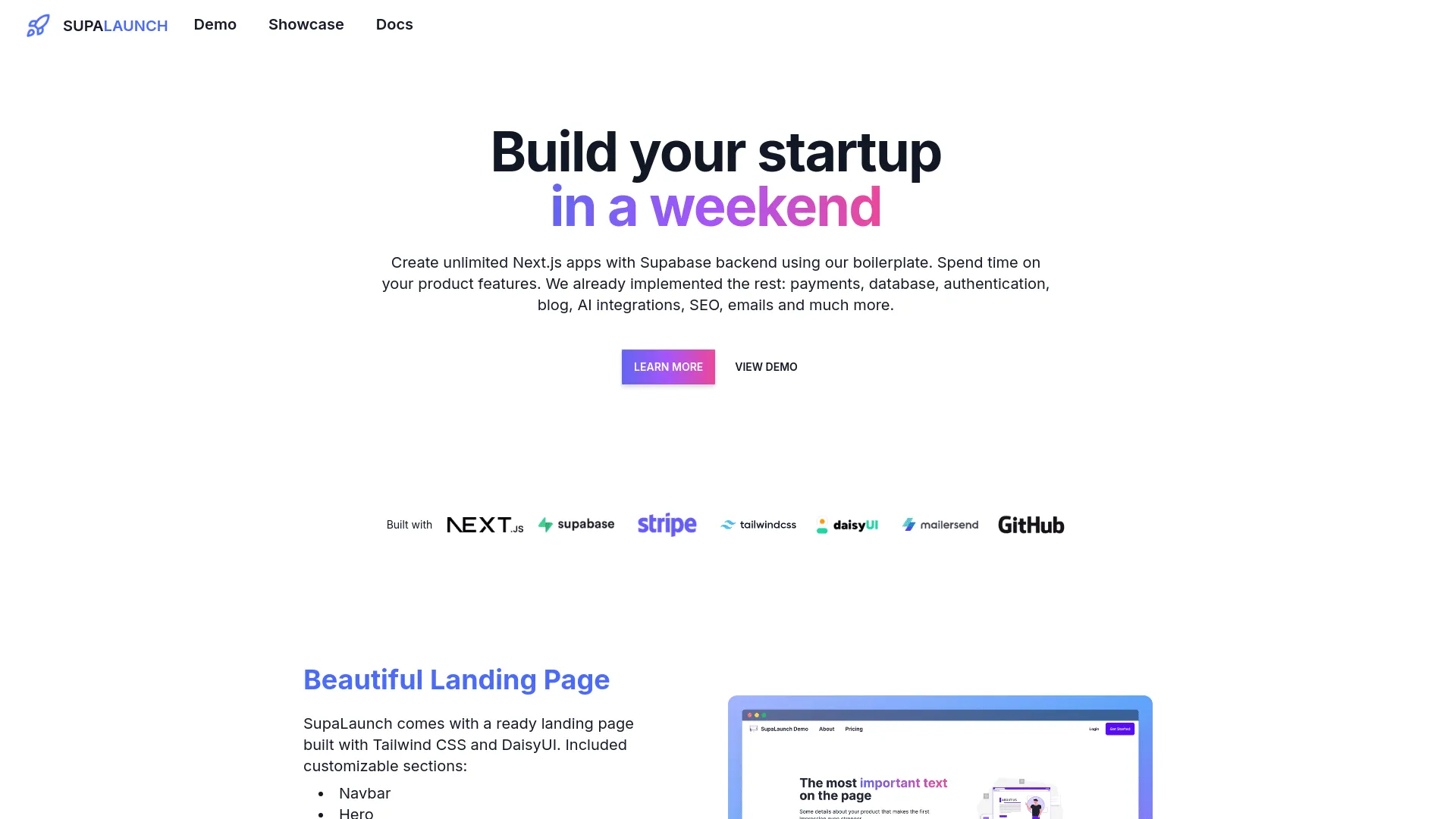
SupaLaunch is a comprehensive SaaS starter kit built with Next.js, Supabase, Stripe, Tailwind CSS, and DaisyUI. It provides a robust foundation for developing professional web applications quickly. Out of the box, SupaLaunch includes secure authentication (with email/password and Google OAuth), a Supabase PostgreSQL database, Stripe integration for payments and subscriptions, AI components like a responsive chat interface with Vercel AI SDK, customizable UI themes, built‑in analytics, email integration via MailerSend, SEO optimization, and ready‑to‑use legal documents and a blog feature.
Stack
Next.js
Price$99
TurboStarter
TurboStarter
TurboStarter is a premium, production-ready full-stack SaaS and app starter kit that helps developers launch web apps, mobile apps, and browser extensions from a single unified codebase. It allows developers to go from zero to production in minutes with built-in support for cross-platform development including web with Next.js, mobile with React Native and Expo, and browser extensions, along with one-click deployment and a comprehensive set of essential SaaS features. TurboStarter includes robust authentication flows such as email/password, magic links, social login, and two-factor authentication. It also provides multi-tenant and team management with role-based permissions, subscription and billing integrations with Stripe, Lemon Squeezy, and Polar, internationalization (i18n), SEO and marketing tools including meta tags, sitemaps, landing pages, blog support, and a fully functional admin dashboard. This creates a complete, scalable foundation ready for production from day one. The starter kit also offers optional features such as AI-powered tools, ready-to-launch SaaS templates with 25+ project ideas, and a built-in CLI for bootstrapping new projects quickly. TurboStarter is actively maintained and updated to ensure compatibility with the latest frameworks and best practices and is already trusted by many developers and production-ready projects. With a one-time license that includes lifetime updates, TurboStarter provides a fast, flexible, and cost-effective way to build modern SaaS or cross-platform applications. It allows developers to skip repetitive boilerplate, accelerate time-to-market, and focus on building the core features of their product.
Stack
Next.jsReact NativeExpo
Price$199
Lifetime
Zexa Next
Zexa Next
ZexaNext is a full‑featured Next.js boilerplate built for SaaS developers and startups who want to launch modern web apps quickly and reliably. It combines robust authentication (email/password, social login, password recovery), PostgreSQL database with Prisma ORM, payment and subscription handling via Stripe, email integration via Resend, and support for responsive landing pages styled with Tailwind CSS. ZexaNext also delivers built‑in features such as dark mode, a markdown‑based blog and documentation system, SEO‑optimized pages, and animated UI components using shadcn/ui and Framer Motion. Its default configuration is optimized for performance and SEO thanks to Next.js server‑side rendering and integrated analytics support. With ZexaNext you skip repetitive boilerplate code and get a scalable, production‑ready foundation from day one — allowing you to focus on building unique product logic and bringing your SaaS idea to market fast.
Stack
Next.js
Price$49
Zippy Starter
Zippy Starter
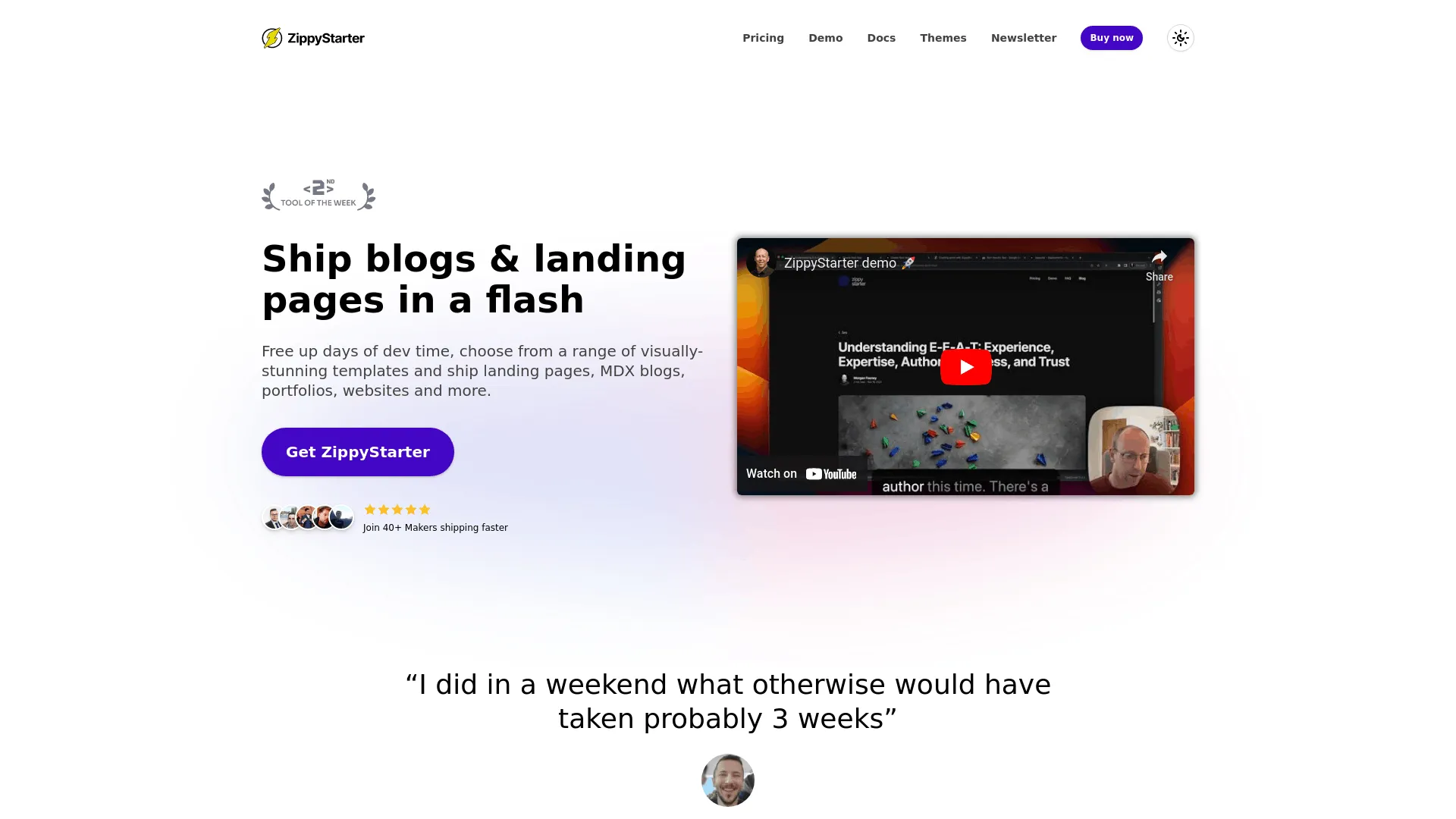
ZippyStarter is a modern, production‑ready Next.js starter kit that lets you launch clean, fast and SEO‑optimized websites — such as blogs, portfolios, marketing sites or landing pages — without building from scratch. Built with React, TypeScript, Tailwind CSS and shadcn/ui, ZippyStarter delivers a polished UI, flexible reusable components and responsive design out of the box. It uses MDX and ContentLayer so you can write content in markdown with embedded React components and skip the need for a backend, CMS or database. With ZippyStarter you get an intuitive CLI for generating blog posts (with metadata, featured images, categories), automatic SEO optimizations, blazing‑fast page performance and fully customizable templates. ZippyStarter is offered under a lifetime license: once you buy it you own the code and can use it across unlimited projects, including commercial ones.
Stack
Next.js
Price$99
Lifetime

Why Use Next.js Boilerplates with Blog?

Blog functionality is essential for content marketing, SEO, and engaging users. Boilerplates with blog features provide content management systems, SEO optimization, comment systems, and publishing workflows. This saves weeks of development time and helps you start content marketing immediately after launch.

Combining Next.js with blog provides a powerful foundation for building modern SaaS applications. Next.js offers excellent performance and developer experience, while blogprovides essential functionality that would take weeks or months to implement from scratch. If you're exploring Next.js boilerplates in general, check out our best Next.js boilerplates page for a comprehensive overview.

What to Look For

When selecting a boilerplate with blog functionality, look for SEO optimization, content editor, categories and tags, comment systems, RSS feeds, and social sharing. The best blog boilerplates include proper URL structures, meta tag management, and content scheduling capabilities.

Additionally, ensure the boilerplate uses the latest Next.js features and follows best practices. Look for active maintenance, regular updates, comprehensive documentation, and positive community feedback. The best boilerplates combine Next.jsbest practices with robust blog implementation. For more information about boilerplates with blog, see our boilerplates with blog page.

Benefits

BenefitDescription
Content marketing
Start blogging immediately
SEO benefits
Built-in SEO optimization
User engagement
Comment systems and social sharing
Time savings
Skip weeks of blog development
Content management
Easy content creation and editing
Professional features
Publishing workflows and scheduling

Getting Started

Getting started with a Next.js boilerplate that includes blogis straightforward. Most modern boilerplates come with comprehensive setup instructions and documentation. Here's a typical workflow to get you up and running quickly:

  1. Choose Your Boilerplate: Review the available options above, comparing features, pricing, and community support. Consider your specific requirements and budget.
  2. Installation: After purchasing, download the boilerplate and install dependencies using the package manager (npm, yarn, or pnpm). Most boilerplates include a setup script to automate initial configuration.
  3. Configuration: Set up your environment variables, including API keys for blog. Most boilerplates include example environment files to guide you through this process.
  4. Database Setup: Configure your database connection and run migrations if required. Many boilerplates include database seeding scripts to populate initial data.
  5. Customization: Start customizing the boilerplate to match your brand and requirements. This includes updating colors, fonts, logos, and adding your unique features.
  6. Testing: Run the test suite to ensure everything works correctly, then start building your unique features on top of the solid foundation.

The best Next.js boilerplates with bloginclude detailed documentation, video tutorials, and active community support to help you succeed.

Common Use Cases

Next.js boilerplates with blog are ideal for various types of applications and business models. Here are some common scenarios where this combination excels:

  • SaaS Applications: Building subscription-based software services that require blog functionality. The combination of Next.js and blogprovides a solid foundation for scalable SaaS products.
  • Marketplace Platforms: Creating multi-vendor marketplaces or platforms that need blog integration. These boilerplates often include the necessary infrastructure for handling complex business logic.
  • Content Management Systems: Building custom CMS solutions with blog features. Perfect for content creators and publishers who need specialized functionality.
  • E-commerce Platforms: Developing online stores and e-commerce solutions that leverage blog for enhanced functionality and user experience.
  • B2B Applications: Creating business-to-business tools and platforms that require blog integration for enterprise-level features and compliance.
  • Startup MVPs: Rapidly prototyping and launching minimum viable products with blog capabilities. These boilerplates help startups validate ideas quickly without building everything from scratch.

The flexibility of Next.js combined with the power of blogmakes these boilerplates suitable for a wide range of applications, from simple tools to complex enterprise solutions.

Best Practices

When working with Next.js boilerplates that include blog, following best practices ensures you build a maintainable, scalable, and secure application. Here are key recommendations:

Security First

Always review and update security configurations, especially for blogintegration. Keep dependencies up to date, use environment variables for sensitive data, and follow Next.js security best practices. Regularly audit your code for potential vulnerabilities.

Code Organization

Maintain clean, organized code structure. Follow the boilerplate's conventions and extend them consistently. Keep blog-related code in dedicated modules or directories for better maintainability.

Testing Strategy

Implement comprehensive testing for blog functionality. Write unit tests, integration tests, and end-to-end tests to ensure reliability. Test edge cases and error handling scenarios.

Performance Optimization

Optimize your Next.js application for performance. Use Next.jsbuilt-in optimization features, implement proper caching strategies, and monitor blogperformance metrics. Consider code splitting and lazy loading for better initial load times.

Documentation

Document your customizations and extensions to blogfunctionality. This helps team members understand the codebase and makes future maintenance easier. Keep documentation updated as you add features.

Regular Updates

Stay updated with Next.js releases and blogupdates. Regularly update dependencies, review changelogs, and test updates in a development environment before deploying to production.

FAQ

Why choose a Next.js boilerplate with blog?

A Next.js boilerplate with blogsaves weeks or months of development time by providing pre-configured blogintegration. This combination gives you a production-ready foundation that follows best practices and allows you to focus on building unique features rather than infrastructure.

How do I get started with a Next.js boilerplate with blog?

Purchase and download the boilerplate, install dependencies, configure environment variables, and follow the setup documentation. Most boilerplates include detailed guides for configuringblog. Once configured, you can start customizing the design and adding your unique features.

Can I customize the blog implementation?

Yes, boilerplates provide full access to the code, allowing you to customize the blogimplementation to match your specific needs. You can modify configurations, add features, and adapt the implementation as your application grows.

What's the typical pricing range for Next.js boilerplates with blog?

Pricing varies depending on the boilerplate's features, support level, and licensing model. Most Next.js boilerplates with blogrange from free (open-source) to $500+ for premium options. Many offer lifetime licenses, which can be cost-effective for long-term projects. Consider the value of time saved versus the purchase price when making your decision.

Do these boilerplates include support and updates?

Most premium boilerplates include documentation, email support, and regular updates. Some offer lifetime updates, while others provide updates for a specific period (e.g., one year). Open-source boilerplates typically rely on community support. Check each boilerplate's support policy before purchasing to ensure it meets your needs.

How long does it take to set up a Next.js boilerplate with blog?

Setup time varies, but most well-documented boilerplates can be running locally within 30 minutes to 2 hours. This includes installing dependencies, configuring environment variables, setting up the database, and running initial migrations. More complex setups or custom configurations may take longer. The best boilerplates include step-by-step guides to minimize setup time.

Can I use these boilerplates for commercial projects?

Most boilerplates allow commercial use, but licensing terms vary. Some require a commercial license for commercial projects, while others are free for any use. Always review the license agreement before using a boilerplate commercially. Premium boilerplates typically include commercial licenses in their pricing.

Are these boilerplates suitable for production use?

Yes, reputable Next.js boilerplates with blogare designed for production use. They include security best practices, error handling, and production-ready configurations. However, you should always review the code, run security audits, and test thoroughly before deploying to production. Look for boilerplates with active maintenance and positive user reviews.

What if I need to migrate from another framework or boilerplate?

Migration depends on your current setup. If you're migrating from another Next.jsboilerplate, the process is usually straightforward - you can often reuse your database schema and business logic. Migrating from a different framework requires more work, as you'll need to rewrite framework-specific code. Some boilerplates offer migration guides or services to help with this process.

How do I choose between different Next.js boilerplates with blog?

Compare features, pricing, documentation quality, community support, update frequency, and user reviews. Consider your specific requirements: Do you need certain features? What's your budget? How important is ongoing support? Review the code quality if possible, and check if the boilerplate follows Next.js and blog best practices. Many developers find it helpful to test a few options before committing.